

Views: 0 Author: Site Editor Publish Time: 2026-07-08 Origin: Site


Finding the perfect balance for your vehicle windows presents a tough dilemma. You want maximum privacy and superior heat rejection. Yet, you also need strict legal compliance and safe nighttime visibility. Choosing the right car window film requires evaluating precise technical specifications. You must look far beyond simple aesthetic darkness.
Metrics like Visible Light Transmission (VLT), Infrared Rejection (IRR), and Ultraviolet Rejection (UVR) dictate how a film actually performs. Ignorance of these numbers often leads to severe safety hazards and hefty regulatory fines. This guide delivers a practical, evidence-based framework. We will help you select the ideal film for your specific needs.
You will learn how to navigate complex state laws and decode vital performance ratings accurately. We will also explore advanced manufacturing materials and specialized automotive applications. Read on to master the true science behind window upgrades and protect your investment.
Visible Light Transmission establishes exactly how much natural light passes through your vehicle's glass. The lower the VLT percentage, the darker the glass appears. A 5% VLT rating represents a "limousine" style darkness, blocking 95% of incoming light. Conversely, a 70% VLT rating remains virtually clear to the naked eye. This metric fundamentally controls both your inward privacy and outward visibility.
Many drivers fall into a dangerous mathematical trap during installation. They ignore the baseline transmission of their factory glass. Most modern vehicles feature a slight factory tint, typically metering around 70% to 80% VLT. Applying new film directly over this glass compounds the darkness.
If you apply a 35% VLT film to factory glass metering at 70%, the final darkness is not 35%. You multiply the two values (0.70 x 0.35) to find the net transmission. Your actual net VLT drops to 24.5%. This cumulative effect easily pushes a seemingly legal upgrade into illegal territory.
Local jurisdictions strictly regulate permissible darkness levels. You must verify regional codes before modifying any vehicle glass. Compliance typically splits into three distinct zones:
Ignoring local transmission laws triggers immediate and long-term consequences. Law enforcement officers use portable photometric meters during routine traffic stops. Failing a field test often results in costly citations and mandatory "fix-it" orders. You will have to pay a professional to strip the illegal material.
More importantly, excessively dark glass drastically elevates your civil liability. If you cause a nighttime collision while operating a vehicle equipped with illegal modifications, opposing insurance adjusters will cite reduced visibility as a primary contributing factor. This negligence can completely void your liability protections.
Understanding solar energy is crucial for achieving true cabin comfort. You must separate the concepts of ultraviolet damage, intense heat, and visible brightness. They represent completely different segments of the electromagnetic spectrum.
Ultraviolet (UV) rays cause interior fading, dashboard cracking, and severe skin damage. Fortunately, nearly all quality films block 99% of UV rays, regardless of their visual shade. Infrared (IR) rays, however, generate the intense heat trapped inside your cabin. A dark film might block visible light perfectly, but if it lacks IR rejection capabilities, your interior will still bake in the summer sun.
Automotive forums constantly debate the efficacy of factory-dyed rear glass. Factory privacy glass provides excellent shade for rear passengers. It visually darkens the cabin and reduces glare effectively. However, it often lacks advanced IR-blocking technology.
You might feel slightly cooler in the shade, but the cabin temperature still rises rapidly. The optimal solution involves layering a clear UV blocking window film directly over the factory-tinted rear windows. This strategy introduces massive thermal resistance. It keeps the vehicle cool without darkening the glass further or violating local transmission limits.
Visual darkness serves as a terrible indicator of climate control. Instead, evaluate the Total Solar Energy Rejected (TSER) rating. TSER calculates the combined reduction of UV, visible light, and infrared heat. A superior film will boast a high TSER rating even at a 70% VLT.
Below is a standardized chart mapping how different solar energy bands affect your driving experience:
| Solar Energy Type | Wavelength Range | Primary Negative Impact | Film Metric to Check |
|---|---|---|---|
| Ultraviolet (UV) | 100nm - 400nm | Skin cancer risks, upholstery fading | UVR (Aim for >99%) |
| Visible Light (VL) | 400nm - 780nm | Eye strain, blinding glare, low privacy | VLT (Match to local laws) |
| Infrared (IR) | 780nm - 2500nm | Extreme cabin heat, AC system strain | IRR (Aim for >80%) |
The performance, longevity, and optical clarity of your modification depend entirely on base chemistry. Manufacturers utilize three primary material categories today. You must match the material structure to your specific goals.
Traditional dyed films represent the industry's entry-level tier. Manufacturers infuse layers of dye into standard PET car window film substrates. This process yields a dark appearance highly effective at reducing visible glare.
This category suits budget-conscious consumers seeking quick aesthetic upgrades rather than serious thermal control.
Carbon alternatives embed microscopic carbon particles directly into the polymer substrate. This construction completely eliminates the use of unstable dyes.
Carbon serves as an excellent middle-ground option. It balances superior aesthetics with reliable longevity.
Nano-ceramic technology represents the current apex of automotive glass modification. Engineers coat the polymer base with non-conductive ceramic nanoparticles. These microscopic structures selectively filter out infrared heat while allowing visible light to pass through.
We recommend ceramic options for luxury vehicles, high-heat climates, and drivers demanding absolute maximum climate control.
Your windshield endures the highest volume of solar exposure and physical impacts of any glass panel on your vehicle. It acts as a massive magnifying glass, superheating the dashboard and front cabin. Traditional tinting laws heavily restrict modifications here.
You cannot legally apply dark materials to the front glass. However, specialized 70% to 90% VLT ceramic films solve this specific problem. These virtually transparent layers block 99% of UV rays and reject massive amounts of infrared heat. Because they maintain factory-level light transmission, they do not impede your forward line of sight.
You must distinguish between interior thermal solutions and exterior physical defenses. A standard interior solar window film solely manages light and heat. It offers no protection against flying debris.
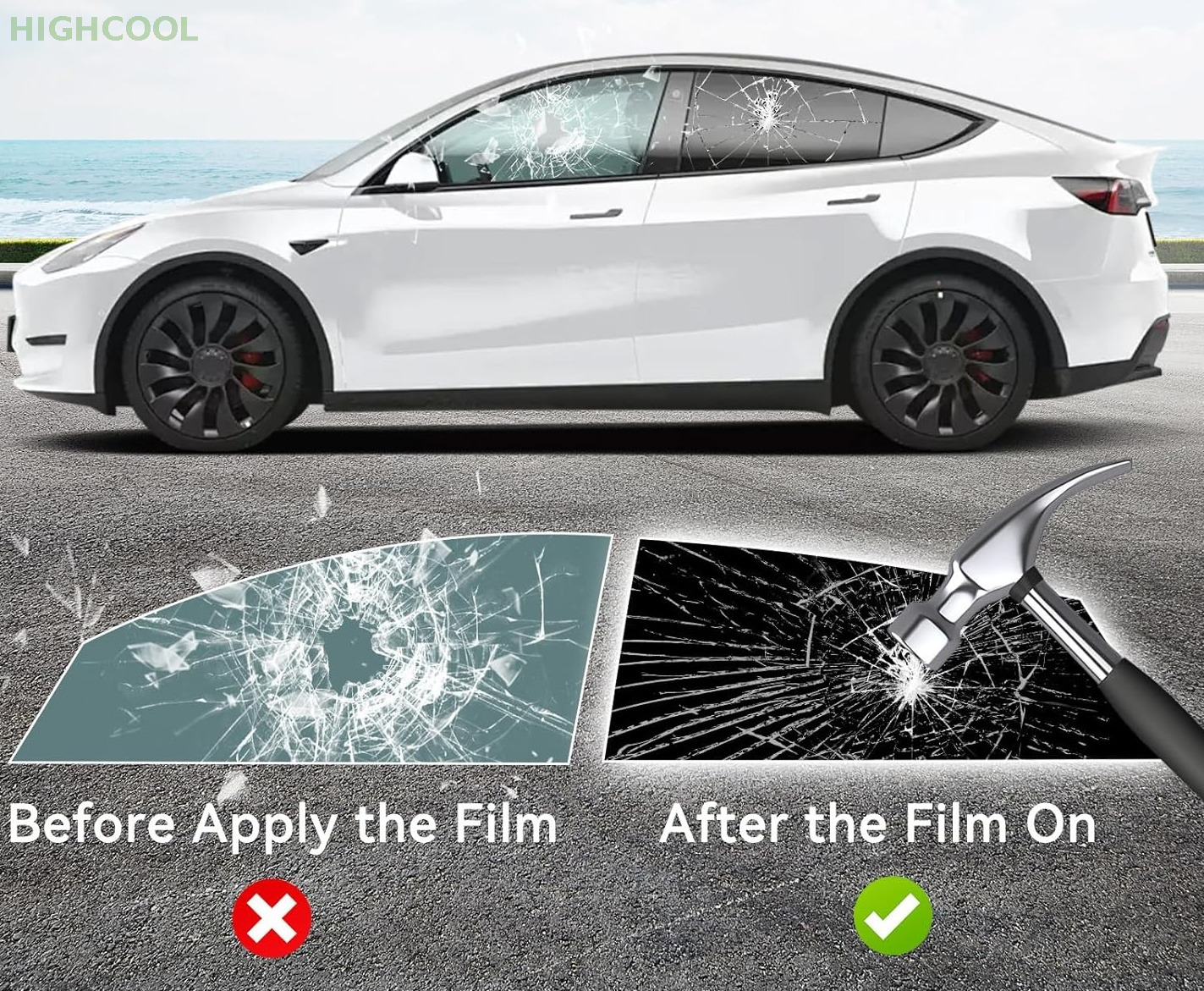
Conversely, a dedicated exterior windshield protection film acts as a sacrificial barrier on the outside of the glass. Manufacturers design these thick, impact-resistant polyurethane layers to absorb kinetic energy. They guard against rock chips, pitting, and spider-web cracks. Combining an exterior impact layer with an interior thermal layer provides ultimate forward-facing protection.
High-quality interior windshield applications drastically improve nighttime driving safety. Advanced ceramic layers diffuse intense light sources. They significantly reduce the blinding "starburst" glare from oncoming LED headlights and poorly angled fog lamps. This optical correction reduces eye fatigue during long evening commutes.
Premium materials perform poorly if installed incorrectly. Selecting a competent shop matters just as much as picking the right brand. Use these strict criteria to evaluate local businesses.
Counterfeit materials flood the aftermarket space. Unscrupulous shops often charge ceramic prices for cheap dyed rolls. Protect yourself by demanding technical transparency.
Examine the shop environment closely. Quality application requires surgical cleanliness. Avoid shops operating out of open-air tents or dusty garages. Look for dedicated, climate-controlled, dust-free installation bays.
Inquire about their cutting techniques. Advanced facilities use computerized plotters to precisely cut automotive window tint patterns from a digital vehicle database. This prevents razor blades from ever touching your actual glass. If they hand-cut, ensure they employ micro-edge filing techniques for a seamless factory look along the top of roll-down windows.
Read the fine print on any guarantee. A basic "lifetime color-stable" warranty only promises the material won't turn purple. It does not cover adhesive failure. You need a comprehensive national warranty. Ensure the contract explicitly covers bubbling, severe peeling, delamination, and thermal stress cracks.
Selecting the ultimate vehicle glass protection requires balancing specific local laws against your desired thermal performance. You must map your budget to the correct material, favoring carbon or nano-ceramic structures for long-term reliability. Never judge a product solely by its aesthetic darkness.
Take immediate action by locating a certified local installer. Ask them to meter your factory glass before starting the project. Identify your regional transmission limits clearly. Request official TSER specification sheets for your chosen material. By following this analytical approach, you guarantee an upgrade that enhances privacy, ensures legal safety, and provides lasting climate comfort.
A: Yes. Factory privacy glass provides shade but often lacks adequate infrared and UV protection. You should opt for a high-VLT (70% or higher) clear ceramic film. This combination delivers massive heat rejection without pushing your rear windows into illegal darkness levels.
A: Yes, severely. A 5% transmission level blocks 95% of incoming light. In unlit environments or heavy rain, identifying pedestrians, debris, or lane markers becomes virtually impossible. It creates massive safety hazards and dramatically increases your liability in an accident.
A: Cheap dyed films only darken the glass visually, fade to purple quickly, and fail to block infrared heat. Ceramic options use advanced nanoparticles to reject massive amounts of heat, last for decades without fading, and provide crystal-clear optical visibility.
A: Application rarely causes issues, but improper removal certainly will. Tearing old material off dry can rip the conductive defroster grids right off the glass. Always use a professional equipped with a commercial steamer to dissolve the adhesive safely during removal.

