

Views: 0 Author: Site Editor Publish Time: 2026-02-05 Origin: Site


When considering car window film, one of the most important factors to understand is the different tint levels available. Tinting your windows not only enhances the appearance of your vehicle but also provides a wide range of practical benefits, from increased privacy to superior heat rejection and UV protection. However, the effectiveness of these benefits can vary depending on the tint level you choose. At HIGHCOOL, we provide a variety of car window films designed to meet your specific needs. This article will guide you through the different tint levels, their impact on performance, and how to choose the right one for your vehicle.
When talking about car window film tint levels, you’ll often encounter the term "tint percentage." This refers to the level of visible light that passes through the window film. The higher the percentage, the lighter the tint, and the more light passes through. Conversely, a lower percentage means less visible light is allowed through, resulting in a darker tint. Understanding how tint percentage works is key to making the right choice for your vehicle.
Visible Light Transmission (VLT) is a measurement that indicates the percentage of light that passes through the window film. For example, a 50% tint allows 50% of the visible light to pass through, while blocking 50%. A 5% tint, often referred to as “limo tint,” allows only 5% of visible light to pass through, making the windows almost opaque.
Different tint percentages serve different needs. If you're looking for privacy, a lower VLT will be more effective. If you want to reduce glare but still have visibility, a higher VLT is a better option. The VLT of your window film affects both the comfort and aesthetics of your car.
The tint level you choose for your car windows will have a significant impact on various performance factors, including heat rejection, privacy, and visibility. Let’s break down these factors to help you make an informed decision.
One of the most significant benefits of car window film is its ability to reject heat. The level of heat rejection can vary depending on the tint percentage. Lower VLTs (darker tints) generally offer better heat rejection, as they block more infrared light. Infrared light is the primary contributor to the heat buildup inside your car. By blocking it, car window film can help keep your vehicle cooler, even on the hottest days.
HIGHCOOL offers films with exceptional heat rejection properties, including ceramic films, which provide superior heat resistance without sacrificing clarity. The darker the film, the better it is at blocking heat. However, it’s important to balance heat rejection with visibility, especially if you need to maintain clear sightlines while driving.
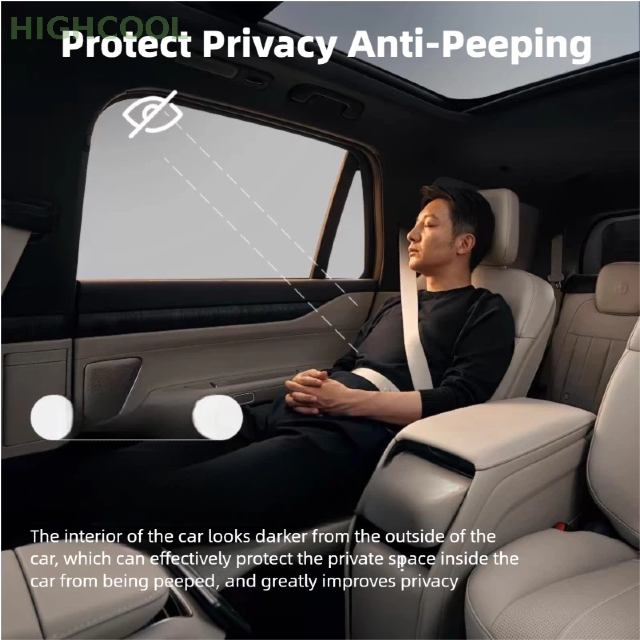
Another key factor affected by tint levels is privacy. A darker tint provides enhanced privacy by making it harder for people to see inside your car. This is particularly important for those who frequently leave personal items in their vehicles or want to maintain a level of security while driving.
However, while a darker tint can offer greater privacy, it may also affect visibility. A 50% tint or higher provides a more transparent look while still offering some privacy. HIGHCOOL offers a range of tint options, from light to dark, allowing you to customize the level of privacy and visibility based on your preferences.
Before applying car window film, it’s crucial to consider the legal regulations regarding tinting in your area. Different regions have specific laws governing how dark your windows can be. Most laws focus on the front windows, which typically must allow a certain percentage of light to pass through for safety reasons. HIGHCOOL offers window films that comply with various legal standards, ensuring that your vehicle’s tint is within the legal limits.
It’s essential to verify the legal requirements for window tinting in your jurisdiction to avoid fines or penalties. While a 5% tint offers maximum privacy, it may not be allowed on certain windows, especially the front windshield, in many places. Check your local laws to make sure you’re choosing a tint level that is both legal and functional.
Choosing the right car window film tint level depends on several factors, including your personal preferences, local climate, and legal regulations. Below are some guidelines to help you choose the best tint for your needs.
If you're someone who spends a lot of time in your car, such as for daily commutes, a medium tint level (around 35%) may be ideal. It offers a balance between heat rejection, UV protection, and visibility, allowing you to enjoy a comfortable driving experience while maintaining a clear view of the road. HIGHCOOL’s ceramic films are perfect for commuters, as they block heat and UV rays without significantly darkening your windows, ensuring a comfortable ride with minimal glare.
For those who prioritize privacy and security, a 20% or 5% tint may be the best choice. These darker tints make it nearly impossible for outsiders to see inside your car, providing maximum privacy. HIGHCOOL’s reflective films are an excellent option for privacy-focused drivers, as they offer a mirrored finish that adds an extra layer of protection while driving or parking in public areas.
If you live in a hot climate, a darker tint that provides higher heat rejection will make your vehicle more comfortable. HIGHCOOL’s ceramic films are particularly effective at blocking infrared light, helping to reduce the interior temperature of your car. For cooler climates, a lighter tint may suffice, offering some UV protection without the need for maximum heat rejection. Choose a tint level that suits your climate and comfort preferences.
To help you visualize the impact of different tint levels, here’s a comparison table that outlines the key features of various tint percentages:
Tint Level (%) | Privacy | Heat Rejection | Best Use Case |
50% | Low | Moderate | Front / legal limits |
35% | Medium | High | Side/rear windows |
20% | High | Higher | Maximum privacy |
5% | Very High | Highest | Show cars / personal preference |
As shown in the table, the privacy and heat rejection increase as the tint percentage decreases. If you're looking for maximum privacy, a 5% tint is ideal, though it may not comply with local laws for front windows. For those seeking a balance of privacy and functionality, 35% or 50% tints may be the best option.
HIGHCOOL’s car window films are designed with quality control to ensure a clearer view, improved performance, and lasting durability. Our films are crafted with the latest technology, offering superior UV protection, heat rejection, and privacy, all while maintaining a high level of clarity. Whether you choose ceramic, reflective, or carbon films, you can be confident that our products will deliver optimal results for years to come.
Additionally, HIGHCOOL’s films are easy to install, and our professional installation services ensure that the film is applied correctly to maximize its lifespan and performance. With a variety of tint levels to choose from, you can select the film that best suits your needs and enjoy the benefits of enhanced comfort and protection.
In conclusion, car window film tint levels offer a range of benefits that can enhance the comfort, privacy, and safety of your vehicle. Whether you're seeking a light tint for everyday commuting, a medium tint for privacy, or a dark tint for maximum heat rejection, HIGHCOOL has the right solution for you. By selecting the appropriate tint level, you can enjoy reduced glare, better UV protection, and a cooler interior, making your driving experience more comfortable and enjoyable.
When choosing the right tint level, consider factors such as your daily driving habits, local climate, and legal regulations. HIGHCOOL offers a wide range of car window films that provide high-quality performance while enhancing the overall look of your vehicle.
For more information on how our high-quality car window film can transform your driving experience, contact us today!
1. What is the best car window film for heat rejection?
HIGHCOOL’s ceramic window films are the best for heat rejection, as they block a significant amount of infrared light without affecting visibility.
2. How do I know which tint level is right for me?
Choose a tint level based on your needs for privacy, heat rejection, and visibility. For maximum privacy, a 5% tint is ideal, while a 35% tint is perfect for everyday use.
3. Is car window film legal?
Laws regarding tint levels vary by location, so it’s important to check local regulations before applying car window film to your windows.
4. Can I install car window film myself?
While DIY installation is possible, HIGHCOOL recommends professional installation to ensure that the film is applied correctly and lasts for a long time.


