


TPU (thermoplastic polyurethane) is the polymer at the heart of many modern paint protection films (PPF), offering a unique combination of flexibility, durability, and self-healing capabilities. At Highcool, we specialize in advanced TPU-based PPF that help vehicle owners protect their car’s paintwork while maintaining its aesthetic appeal. Beyond mere protection, TPU PPF acts as a long-term investment, keeping vehicles in pristine condition and potentially preserving resale value. This article explains what TPU is, how it functions inside PPF, and why choosing a quality TPU PPF can make a significant difference for long-term paint protection.
TPU stands for thermoplastic polyurethane, a versatile polymer known for combining elasticity with toughness. TPU is unique because it behaves both like a thermoplastic and an elastomer, allowing it to stretch under stress and return to its original shape without permanent deformation. This makes it ideal for automotive PPF, where the film must adapt to curves, contours, and complex geometries of modern vehicles.
In a typical PPF, TPU forms the clear film layer that sits directly on top of the vehicle’s paint. This layer is backed by a pressure-sensitive adhesive, a protective release liner, and, in some products, an additional topcoat that enhances UV resistance and self-healing properties. The TPU layer is the primary protective barrier, absorbing impacts and resisting environmental factors such as bird droppings, acid rain, and tree sap. The adhesive ensures secure attachment without damaging the paint, while the optional topcoat provides extra longevity and aesthetic stability.
The material properties of TPU make it an ideal choice for paint protection:
Elasticity: TPU can stretch and recover, enabling it to conform to curves and edges without cracking.
Abrasion Resistance: It resists scratches, scuffs, and minor impacts that could otherwise damage paint.
Chemical Resistance: TPU withstands common contaminants like road salts, oils, and cleaning agents.
Durability: Long-lasting performance ensures the vehicle remains protected for several years, minimizing maintenance costs.
These traits allow TPU PPF to combine functional protection with aesthetic preservation, giving car owners confidence in both daily use and high-performance driving conditions.
The first step in transforming TPU into a paint protection film involves forming it into a thin, transparent sheet. This can be achieved through extrusion or casting processes. In extrusion, TPU pellets are melted and passed through a flat die to create a uniform sheet, while in casting, liquid TPU is spread onto a carrier film and allowed to solidify. These methods require precise temperature and pressure control to maintain film consistency, transparency, and elasticity. Advanced quality control ensures minimal defects, uniform thickness, and smooth surface finish, which are critical for seamless application and long-term protection.
After forming the base TPU film, many PPF manufacturers apply topcoats that enhance durability and performance:
UV-Resistant Coatings: Prevent discoloration or yellowing caused by sunlight over time.
Self-Healing Coatings: Allow minor scratches and swirl marks to disappear when exposed to heat from sunlight or warm water.
Hydrophobic/Anti-Stain Coatings: Reduce water spots, dirt adhesion, and simplify cleaning.
Gloss-Enhancing Coatings: Improve the visual depth and shine of the underlying paint.
Highcool TPU PPF often feature advanced multi-layer topcoats to maximize lifespan, maintain optical clarity, and provide an easy-to-clean surface for busy car owners.
TPU PPF typically ranges from 6 to 10 mils (0.15–0.25 mm). Thicker films provide superior impact absorption and better protection against stone chips and minor collisions, while thinner films conform more easily to complex curves and edges. Choosing the right thickness depends on the vehicle type, driving conditions, and personal preferences. Thicker TPU films are generally recommended for high-impact areas such as front bumpers, hoods, and side mirrors.
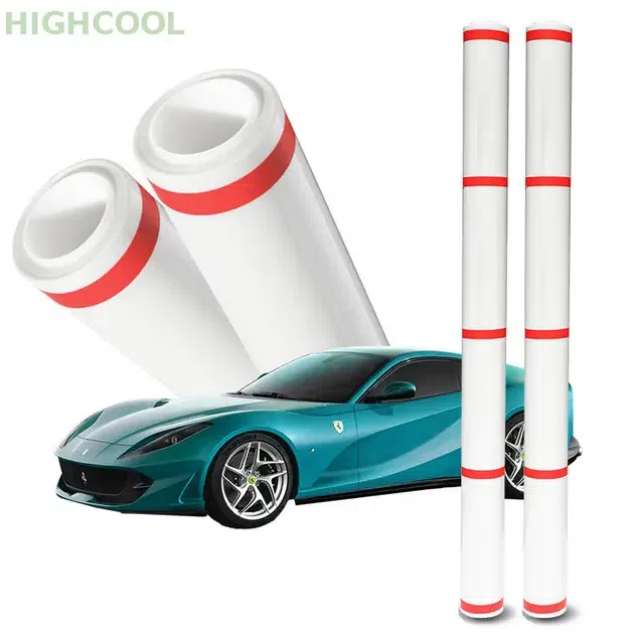
TPU’s elastic nature allows it to absorb and dissipate energy from impacts, protecting the underlying paint from chips and scratches. This feature is particularly valuable for vehicles frequently exposed to highways, gravel roads, or urban debris. TPU PPF acts like a buffer, significantly reducing repair costs and paint damage. For owners who value both aesthetics and long-term maintenance, Highcool TPU PPF ensures consistent protection in diverse driving environments.
One of TPU’s most remarkable properties is its self-healing capability. Minor scratches or swirl marks gradually disappear when exposed to heat, such as sunlight or a gentle warm water treatment. This self-healing property relies on TPU’s elastic recovery and the specialized topcoat layer, allowing vehicles to maintain a flawless appearance with minimal intervention.
High-quality TPU PPF maintains the original color, gloss, and depth of the paintwork. Unlike cheaper alternatives, it does not cause haziness, clouding, or color distortion. This ensures that vehicles retain their showroom finish, enhancing both aesthetic value and potential resale price. Highcool TPU PPF are engineered to preserve these optical qualities over time, making them an ideal choice for owners who prioritize long-term appearance.
While TPU PPF is more expensive than PVC or other lower-quality films, its superior protection, flexibility, and longevity justify the investment. Cheaper films often yellow, crack, or fail to self-heal, resulting in higher maintenance and replacement costs over time. Investing in high-quality TPU PPF ensures consistent protection, reducing long-term expenses.
A widespread misconception is that all PPF yellow over time. Premium TPU films, particularly those with UV-resistant topcoats, maintain their clarity for years. Yellowing typically results from inferior materials, poor coatings, or improper maintenance, rather than the TPU itself. Highcool’s TPU PPF are specifically designed to resist yellowing, keeping vehicles looking pristine in all conditions.
Proper installation is crucial for TPU PPF performance. Incorrect application can cause bubbles, wrinkles, or reduced adhesion, compromising protection. Professional installation ensures seamless coverage, maximizes impact resistance, and maintains the optical clarity of the film. At Highcool, certified installers are trained to apply TPU PPF accurately, delivering both aesthetic and functional benefits.
When selecting a TPU PPF, pay attention to the following:
Topcoat Type: Self-healing, UV-resistant, and hydrophobic coatings.
Film Thickness: Match the thickness to the vehicle area and impact risk.
Warranty: Ensure coverage for yellowing, peeling, or cracking.
Certified Installer: Professional application ensures long-lasting performance.
What is included in the warranty?
Does the PPF feature self-healing and UV protection?
Can damaged sections be replaced individually?
Are certified installation services available?
These questions help vehicle owners make informed decisions and guarantee that TPU PPF provides maximum protective and aesthetic benefits.
TPU in PPF represents the modern, high-performance choice for protecting vehicle paint from chips, scratches, and environmental damage. Highcool’s TPU-based PPF combine elasticity, abrasion resistance, self-healing properties, and optical clarity to maintain the pristine look of vehicles while providing long-term protection. By choosing high-quality TPU film and professional installation, car owners can preserve both aesthetics and value. For more details on our TPU PPF options and certified installation services, contact us today.

