

Views: 0 Author: Site Editor Publish Time: 2026-08-13 Origin: Site


Selecting the wrong thickness completely compromises your vehicle's defense. Go too thin, and you risk severe paint damage from road debris. Go too thick, and installation becomes a nightmare while the visual finish suffers immensely.
Many buyers fall for the outdated "thicker is always better" myth. We need to move past this flawed evaluation mindset entirely. The optimal choice requires a careful balance between impact resistance, optical clarity, and installer capability.
This guide establishes a strict hard-data framework for your next project. It helps you evaluate and specify the exact right film thickness accurately. You will learn to make much smarter procurement choices for both commercial and consumer applications.
Film thickness directly dictates the trade-off between impact defense and installation flexibility on complex vehicle contours.
8.5mil PPF serves as the optimal baseline for most premium daily-driving applications, balancing durability with minimal "orange peel" effect.
The overall thickness measurement includes the release liner, adhesive, TPU base, and topcoat—evaluating the thickness of the TPU core itself is critical for accurate procurement.
High-thickness films (10mil+) require advanced installer expertise and increase the risk of edge-lifting if misapplied.
Let us examine the basic physics of impact absorption first. Different mil measurements disperse kinetic energy in radically different ways. Rock chips hit your front bumper at extremely high speeds on the highway. A thicker polyurethane matrix absorbs far more force before puncturing. The material spreads this sudden kinetic energy outward. This action protects the delicate factory clear coat underneath. However, simply adding mass changes the physical properties of the film. You cannot increase thickness endlessly without facing severe drawbacks.
Visual trade-offs become apparent very quickly as thickness increases. Optical clarity correlates directly to total material mass. Thicker layers frequently induce unwanted optical distortion. Industry professionals often call this surface texturing or the "orange peel" effect. Light reflects unevenly off heavy, dense films. You naturally want a flawless, glass-like finish on luxury cars. Overly thick TPU paint protection film struggles to deliver this pristine, invisible look.
Labor cost implications matter immensely for both shops and consumers. Thicker films exponentially increase the total installation time. They require highly specific heating techniques to stretch properly. Heavy-gauge polyurethane fights back aggressively during application. This intense physical resistance slows down technicians significantly. Longer install times directly hurt profit margins for installation shops. Shops must charge clients more to compensate for the extreme difficulty.
Common Mistake: Many shop owners focus only on material costs. They forget to calculate the extra labor hours required to manipulate stubborn, heavy films around complex bumpers.
We categorize modern films by their total mil thickness. Each category serves a specific purpose in the automotive industry. Understanding these tiers prevents you from overpaying or under-protecting.
These specifications represent the standard or entry-level tier. They work beautifully for large, flat panels. Budget-conscious applications benefit greatly from these thinner rolls. Daily city driving rarely demands extreme impact defense. Thinner films stretch easily over mild curves. You will find them very easy to manipulate. However, they carry clear physical limitations. You face significantly lower puncture thresholds. Heavy abrasion reduces their longevity rapidly compared to thicker options.
The industry standard sits comfortably right at the 8.5mil mark. The vast majority of consumer vehicles use 8.5mil PPF today. It offers the highest cost-to-benefit ratio available anywhere. You get sufficient depth for proper topcoat leveling. It maintains excellent elasticity for wrapping complex bumper curves. Installers love it because it handles beautifully under tension. Owners love it because it looks virtually invisible.
Heavy-duty applications push straight into 10mil territory. Exotic track cars absolute need this extreme armor. Extreme off-roading also easily justifies the extra bulk. High-impact zones take a severe beating constantly. 10mil film stops severe rock strikes dead in their tracks. Yet, you face massive material costs. Installation limits become incredibly strict at this thickness. Poor conformability on sharp radius edges causes major headaches.
Film Thickness Application Summary
Thickness Spec | Primary Use Case | Installer Conformability | Impact Resistance |
|---|---|---|---|
6.5mil - 7.5mil | City commuters, flat body panels | High (Easy to stretch) | Low to Moderate |
8.5mil | Luxury vehicles, full-body wraps | Optimal Balance | High |
10mil+ | Track cars, off-road fleets | Low (Requires high heat) | Extreme |
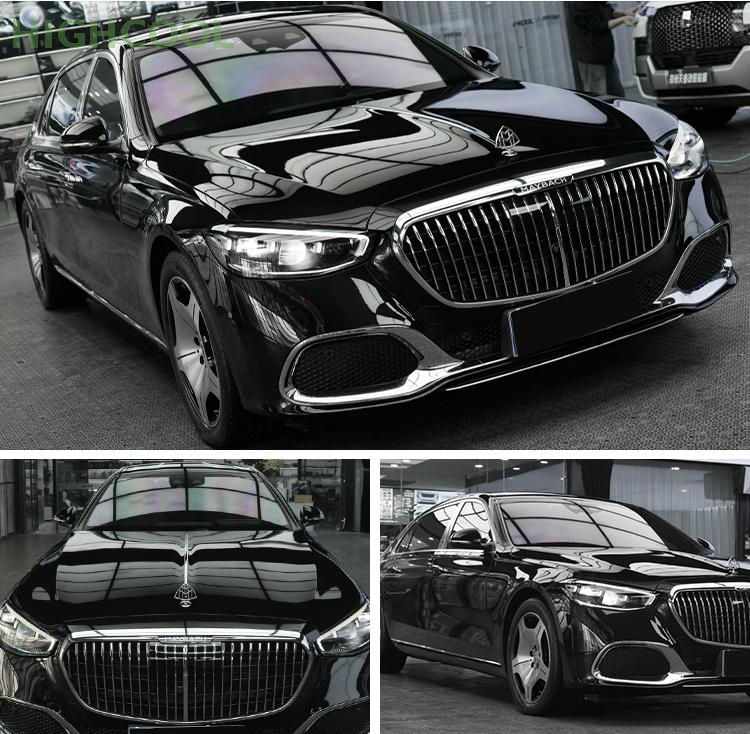
Total thickness only tells half the story. The topcoat to TPU ratio matters significantly more. Some manufacturers actually cheat the spec sheet. They sell an 8.5mil film containing a heavily diluted TPU core. They compensate by using excessively thick, cheap adhesive. This poorly balanced film performs terribly over time. It offers far less puncture resistance than genuine high-core films. You must verify the actual polyurethane depth before buying.
Topcoat formulation directly drives self-healing PPF performance. The depth of the elastomeric polymer topcoat is absolutely crucial. It dictates how well the film recovers from daily micro-scratches. Sun heat activates these advanced polymers, allowing them to flow. A thin, cheap topcoat loses this self-repairing ability quickly. Premium films allocate enough thickness specifically to ensure long-term healing capabilities.
Adhesive integrity cannot be ignored under any circumstances. Thick films exhibit intense material memory. They desperately want to shrink back to their original flat shape. We call this phenomenon "pull-back." If the adhesive layer lacks structural shear strength, edges will inevitably lift. High-tension stretches require highly aggressive, stable adhesives. Otherwise, complex corners fail just weeks after installation.
Best Practice: Always request Technical Data Sheets (TDS) from your supplier. Check the exact micron breakdown of the topcoat, core, and adhesive layers. Do not accept a generic total thickness number.
Stretching heavy film over aggressive aerodynamic styling tests physical limits. Conformability drops sharply as film thickness increases. Modern sports cars feature incredibly sharp creases and deep air intakes. Wrapping a thick material into a deep recess requires immense skill. The material builds up excessive surface tension. Installers must relieve this stress carefully to avoid tearing. You cannot force heavy film to do something unnatural.
Over-speccing film thickness leads directly to warranty disasters. Complex vehicles reject ultra-thick films on sharp hood edges. Premature edge failures become incredibly common. Dirt accumulates rapidly under these lifted edges, ruining the vehicle aesthetic. Warranty claims skyrocket when inexperienced shops use heavy films improperly. You must always match the material thickness to the vehicle's specific geometry.
Distributors need a highly calculated inventory strategy for wholesale PPF. High-volume shops should absolutely standardize on an 8.5mil core inventory. This versatile thickness handles ninety percent of daily consumer jobs. It perfectly balances ease of use and solid protection. Reserve 10mil films exclusively for specialized, high-margin projects. Managing inventory this way protects your shop cash flow. It also drastically reduces wasted material from failed, over-tensioned installations.
We need a highly reliable framework for final selection and procurement. Adhering to structured criteria removes guesswork. Follow these exact steps to ensure consistent success across all vehicle applications.
Assess the primary operational environment: Commuter cars face entirely different threats than dedicated track cars. Off-road vehicle fleets encounter heavy brush and flying gravel daily. City commuters deal mostly with minor road debris and bug acids. Match your kinetic absorption needs strictly to the realistic driving environment.
Evaluate installer proficiency: Do not procure 10mil film randomly. Only buy it if your installation team has deep experience. Manipulating heavy-gauge polyurethane takes years of practice to master. Inexperienced hands will overstretch the material constantly. They will induce adhesive distortion or accidentally cut into the paint.
Implement a hybrid application strategy: This approach maximizes both protection and optical clarity. Specify heavy-duty 10mil film strictly for high-impact front-end zones. Apply it directly to front bumpers and lower rocker panels. Utilize standard 7.5mil or 8.5mil automotive protection film for the rest of the vehicle. This covers hoods, doors, and rear quarter panels. You save money while optimizing extreme defense exactly where it matters most.
Best Practice: When using the hybrid method, ensure both films come from the same manufacturer line. This guarantees the topcoat gloss levels match perfectly under sunlight.
Optimal TPU thickness acts as a highly calculated compromise. You must carefully balance maximum kinetic absorption against realistic installation constraints. Thicker films protect better but heavily challenge even veteran installers. Standard films offer seamless visual integration but lesser extreme defense against large debris. Navigating this spectrum requires understanding both physics and shop limitations.
Take concrete action steps before your next bulk order. First, request technical data sheets from your suppliers. Verify the distinct layer-by-layer composition before committing to purchases. Ensure you pay for a robust TPU core, not just thick glue. Finally, test film samples on high-radius vehicle contours. Validate the adhesive hold and thoroughly check for optical clarity under bright inspection lights.
A: No. Self-healing relies on the topcoat formulation, not the overall thickness of the TPU base. A thicker film with a cheap topcoat will perform worse than a standard film with a premium elastomeric topcoat.
A: Premium 8.5mil films utilize advanced self-leveling topcoats that mimic factory clear coats, mitigating the orange peel effect. However, poor installation techniques, like aggressive over-stretching, can still induce visual distortion.
A: Yes. A common, highly effective strategy is installing 10mil on the front bumper and rocker panels for maximum impact resistance, while applying 8.5mil on the hood, doors, and rear panels to maintain optical clarity and manage costs.


