

Views: 0 Author: Site Editor Publish Time: 2026-08-20 Origin: Site


Vehicle owners and professional restyling shops face a critical dilemma today. You must choose the right foundational material before committing to a vehicle transformation. This initial decision ultimately dictates the final appearance, longevity, and overall success of your project. The automotive customization industry has shifted dramatically in recent years. We moved away from traditional, highly textured options. We now embrace advanced polymers engineered for perfection. Modern options deliver a stunning, factory-level realism never seen before.
This comprehensive guide serves a specific, practical purpose. We aim to provide a transparent, risk-aware framework for you. We will compare these two competing materials objectively. You will understand how they align against your strict budget requirements. You will learn how they meet your specific aesthetic goals. Finally, we will uncover the harsh installation realities behind both options.
Vehicle owners consistently demand pristine, factory-paint aesthetics. They want this premium look without paying for an expensive, permanent respray. Historically, aftermarket films looked obvious to the trained eye. They appeared slightly dull under direct sunlight. Their surfaces often showed heavy textures. This visual compromise frustrated enthusiasts. It drove significant innovation in automotive wrap material design.
The structural differences between film generations are straightforward but highly impactful. Traditional manufacturing relies on added liquid plasticizers. Manufacturers blend these chemicals to maintain extreme flexibility. Over time, these plasticizers can migrate or evaporate. In contrast, modern engineering utilizes a denser, flatter liner system. Its rigid internal structure mimics the smooth, reflective nature of automotive clear coat. This structural change revolutionized the industry.
How do we define a successful installation today? We measure success using incredibly strict criteria. We look for uncompromised long-term durability across changing seasons. We expect zero visible adhesive lines upon close inspection. We demand deep, rich color saturation mirroring actual paint. Finally, the material must offer completely clean removal after its lifecycle ends.
Let us closely examine cast and calendared vinyl structures. These materials represent the historical backbone of the custom automotive industry. Cast vinyl is essentially poured as a liquid and baked into sheets. This precise manufacturing process creates a highly stable, uniform film. It resists shrinking better than cheaper calendared alternatives.
A standard PVC car wrap delivers several distinct, undeniable advantages. It offers extreme stretchability under heat. Installers rely heavily on it for deep vehicle recesses. It handles complex aerodynamic bumpers effortlessly. The overall installation process remains incredibly forgiving. Beginners and home-garage DIYers often prefer this specific flexibility. You also benefit from noticeably lower upfront material costs.
However, inherent material limitations absolutely exist. The chemical structure is notorious for the "orange peel" effect. You will notice a slight, bumpy surface texture upon close inspection. Gloss finishes on these traditional films degrade faster over time. Intense UV exposure breaks down their surface gloss quicker than modern polymer alternatives. They require frequent applications of protective sealants to survive.
We recommend this material category for specific, practical scenarios. It works perfectly for commercial fleet graphics and transit vans. Budget-conscious daily drivers benefit greatly from its affordability. Vehicles boasting aggressive curves or deep vents need this supreme flexibility. First-time wrappers should always start their learning journey here.
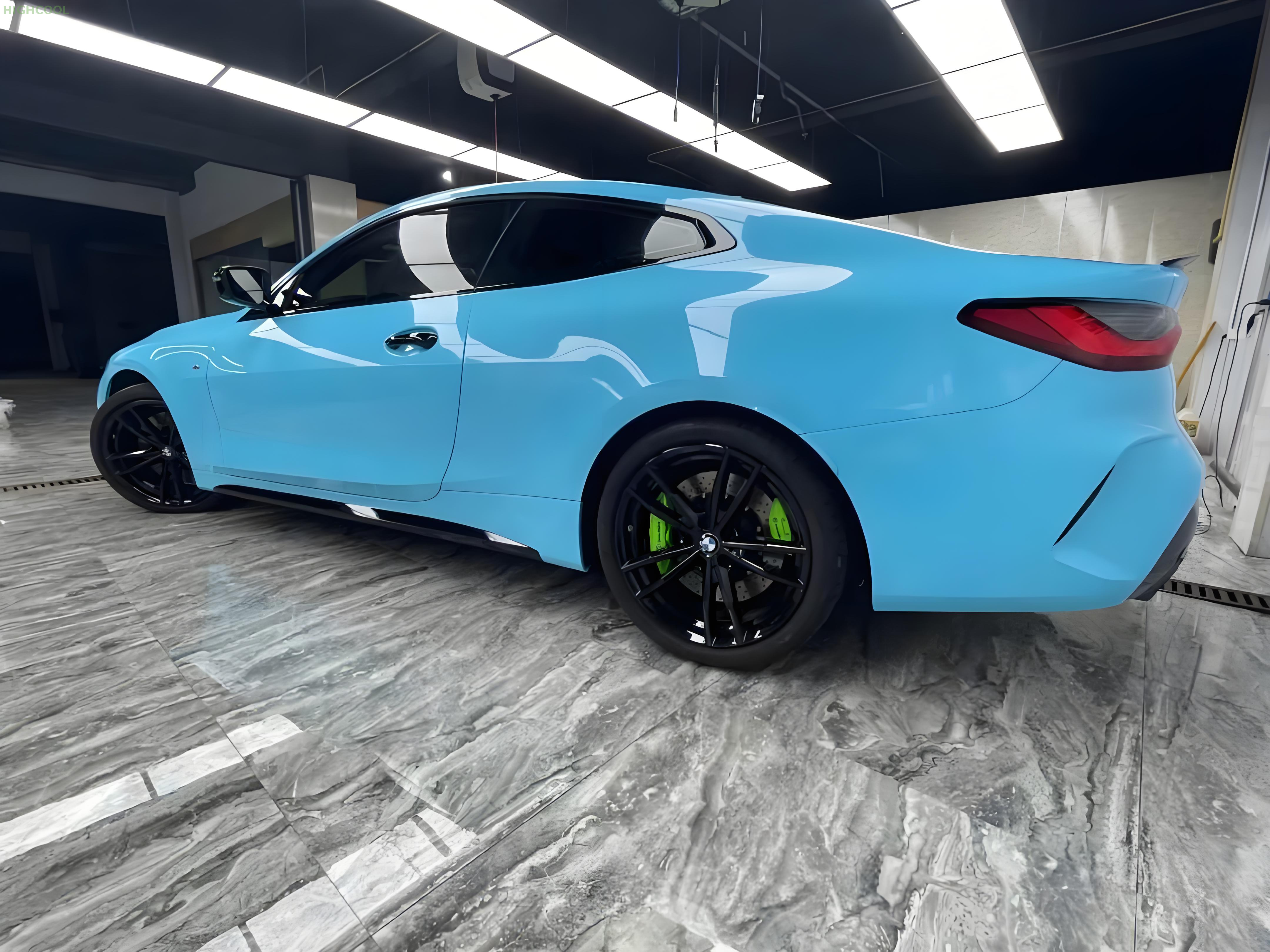
This advanced material now dominates the premium customization market. Elite installers choose it daily for clients demanding absolute perfection. The material profile focuses intensely on structural rigidity rather than extreme elasticity. The manufacturing process uses specialized backing liners. These liners prevent the adhesive texture from telegraphing through to the surface.
Modern PET car wrap film provides truly unmatched surface smoothness. It effectively eliminates the dreaded orange peel effect entirely. You get superior high-gloss finishes mirroring liquid glass. The ultra-metallic variants look stunningly realistic under showroom lighting. It also offers higher baseline resistance to minor surface abrasions. Contaminants like bird droppings wash off easier due to the slicker topcoat.
You must carefully consider the inherent installation limitations. The material possesses significantly lower elasticity. It feels much stiffer during the initial application. Installers must employ highly precise heat management techniques. Over-stretching causes rapid color discoloration and structural failure. You will also face a substantially higher upfront material cost.
These unique characteristics dictate its best use cases perfectly. We strongly suggest using it on high-end luxury vehicles. Show cars benefit immensely from the flawless, mirror-like finish. Flat-panel vehicles are ideal candidates for this rigid structure. Choose this material only if you demand a 100% factory-paint aesthetic.
Proper car wrap selection requires comparing materials across several core dimensions. We must evaluate aesthetics, environmental durability, and overall project value.
Each material handles different finishes in completely unique ways. Advanced polymers absolutely dominate the ultra-gloss category. The stiff liner prevents any adhesive texture transfer. This directly results in perfect, mirror-like surface reflections. Traditional vinyl remains highly reliable for matte and satin finishes. When selecting a color change vinyl in a flat sheen, traditional materials still perform beautifully. Matte finishes hide the underlying orange peel texture naturally.
Expected lifespans vary wildly based on local environmental factors. You can expect 3 to 5 years from traditional cast films. Premium polymer alternatives often exceed 5 solid years. This depends heavily on the integrated protective topcoat. UV degradation affects softer plastics much more rapidly. Stiffer panels offer slightly better chemical resistance against environmental fallout, acid rain, and tree sap.
You must balance the initial financial investment against long-term aesthetic longevity. Upfront material costs are undeniably higher for premium stiff films. Professional labor fees also increase due to longer, more careful installation times. However, the resulting finish often provides a much higher aesthetic return on your investment. The realistic, paint-like appearance lasts longer when properly maintained. Budget planning must account for both the film purchase and the expert labor required.
Table 1: Material Comparison Matrix
| Evaluation Feature | Traditional Cast Vinyl | Advanced Polymer Film |
|---|---|---|
| Surface Finish Texture | Slight Orange Peel | Ultra-Smooth (Paint-like) |
| Material Elasticity | High (Forgiving) | Low (Stiff) |
| Installation Difficulty | Moderate (DIY Friendly) | High (Professional Recommended) |
| Gloss Longevity | Average | Excellent |
| Upfront Material Cost | Lower | Higher |
Understanding the actual application process prevents costly project failures. You must respect the physical boundaries of your chosen material.
Automotive DIY communities frequently discuss catastrophic installation failures. We validate these specific concerns entirely. Tackling a stiff polymer film as a beginner presents extreme challenges. Trying to wrap aggressive front bumpers or complex mirrors is a high-risk scenario. The material does not stretch easily over sharp corners. Beginners often tear the film or ruin the adhesive backing.
Professional restyling shops understand these specific installation realities deeply. They manage directional tension perfectly across large panels. They know the critical post-heating temperatures required to set the memory. Applying incorrect heat leads to immediate adhesive failure. Over-stretching guarantees edge lifting within mere weeks.
Best Practice: Installers should always use carefully planned inlays for sharp angles. Never force a stiff material into a deep recess. Pre-stretching techniques require exact temperature control to prevent gloss loss.
We strongly recommend a specific mitigation strategy for owners. If you choose an ultra-gloss finish, hire certified professionals immediately. Do not attempt it in a dusty home garage. Professional installation ensures your manufacturer warranty remains entirely valid. It guarantees the flawless, mirror-like finish you expect. Experienced hands prevent expensive material waste.
Follow this simple decision matrix before buying your materials.
Take these highly actionable next steps today:
Neither material ranks universally better across every possible scenario. They serve entirely different segments of the complex automotive market. Your final choice depends heavily on your specific visual goals and budget limits. We must reiterate one crucial, undeniable point. You must pair high-quality film with experienced, careful installation. A great film fails quickly under poor installation techniques. Browse our available color options today. Order a sample kit to feel the structural difference yourself. Contact a dedicated sales representative to receive a customized project recommendation.
A: Yes. The material is noticeably stiffer. It requires precise heat management and careful directional tension. Beginners struggle to navigate complex curves without over-stretching it or damaging the glossy surface layer.
A: Absolutely. Ceramic coatings are highly compatible with both materials. A proper coating provides an excellent sacrificial layer. It drastically extends the lifespan of the film by blocking harmful UV rays and repelling acidic contaminants.
A: Premium polymer films generally remove cleaner. Their stiffer structure prevents tearing into tiny pieces. However, clean removal always depends on proper post-heating during installation and consistent UV protection throughout the vehicle's lifespan.
A: TPU represents the next tier up. It is primarily used for Paint Protection Film (PPF). It offers vastly superior impact protection and self-healing properties. However, its color change options remain heavily limited compared to vinyl.


