

Views: 212 Author: Site Editor Publish Time: 2025-07-22 Origin: Site


Car window films have become an essential accessory for vehicle owners worldwide. They not only enhance the aesthetic appeal of a car but also provide crucial benefits such as UV protection, heat rejection, glare reduction, and privacy. However, not all car window films are created equal. The market primarily offers three main types of films: dyed, metalized, and ceramic. Each type is based on different technologies and materials, leading to varying performance characteristics, costs, and suitability for different applications. Understanding the differences between dyed, metalized, and ceramic window films is vital for making an informed purchase that aligns with your needs and budget.
Dyed window films are among the most traditional and affordable types available on the market. Their primary mechanism for heat and UV protection relies on a layer of dyed material embedded in the film.
Dyed films contain a carbon-based dye that absorbs solar energy, including visible light and ultraviolet radiation. This absorption reduces glare and provides moderate heat reduction by trapping heat within the film. Dyed films do not reflect light; instead, they create a tinted appearance by darkening the glass.
Cost-Effective: Dyed films are typically the most affordable option, making them attractive for budget-conscious buyers.
Aesthetic Appeal: They provide a sleek, uniform tint that enhances privacy and reduces glare.
UV Protection: While not as advanced as other types, dyed films still block a significant portion of harmful UVA and UVB rays.
Easy to Install: The simple structure of dyed films makes them relatively easy to apply without specialized equipment.
Heat Rejection Limitations: Dyed films absorb heat rather than reflecting it, which can cause the film and the glass to become very hot. This reduces overall heat rejection efficiency compared to other films.
Fading and Discoloration: Over time, exposure to sunlight causes the dye to fade or discolor, which diminishes the film's performance and appearance.
Durability Issues: Dyed films are more prone to scratches and wear than metalized or ceramic films.
No Signal Interference: Although not a disadvantage per se, the lack of metal content means dyed films do not interfere with electronic signals, which can be a positive or negative depending on user needs.
Dyed window films are suitable for drivers seeking an affordable, visually appealing tint primarily for privacy and moderate UV protection. They are ideal for personal vehicles used in milder climates or for those who do not require advanced heat rejection.
Metalized window films incorporate microscopic metal particles embedded within the film layers, offering superior reflective properties and heat rejection.
These films contain thin metal layers—usually aluminum or stainless steel—applied through processes like vacuum metalizing or sputtering. The metal particles reflect infrared radiation and UV rays, reducing the amount of heat entering the vehicle.
Excellent Heat Rejection: Metalized films reflect solar heat, effectively lowering interior temperatures and reducing air conditioning use.
UV Protection: Metal layers block up to 99% of UVA and UVB rays, offering strong protection against skin damage and interior fading.
Durability: Metalized films are highly durable, resistant to scratching and fading, and maintain performance over many years.
Glare Reduction: These films reduce glare, improving driving comfort and visibility.
Signal Interference: The metallic particles can disrupt radio, GPS, cellular, and satellite signals, causing connectivity issues.
Appearance: Metalized films often have a shiny, reflective finish that may not appeal to all users or comply with certain vehicle tinting laws.
Cost: Generally more expensive than dyed films, but less costly than ceramic films.
Installation Complexity: These films require precise installation to avoid defects and maintain optical clarity.
Metalized films are best for drivers who prioritize superior heat rejection and UV protection and do not mind potential signal interference. They are suitable for warmer climates and vehicles where electronic signal reception is less critical.
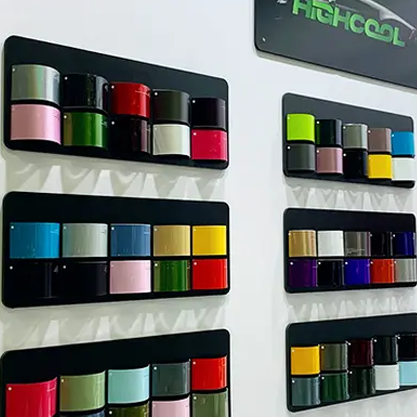
Ceramic window films represent the latest advancement in car window tinting technology. Utilizing nano-ceramic particles, these films combine high performance with aesthetics and durability.
Ceramic films use non-metallic, nano-ceramic particles that absorb and scatter solar radiation. Unlike metalized films, ceramic films do not contain metal, ensuring they do not interfere with electronic signals.
Superior UV Blocking: Ceramic films block up to 99.9% of UVA and UVB rays, offering maximum protection against skin cancer and interior damage.
Excellent Heat Rejection: They reject a high percentage of infrared radiation, keeping the vehicle interior cooler without compromising visible light transmission.
No Signal Interference: Since ceramic films are metal-free, they maintain clear GPS, radio, and mobile phone signals.
Durability and Clarity: Ceramic films are highly scratch-resistant, fade-resistant, and maintain clarity over time.
High Visible Light Transmission Options: They allow for lighter tints that still offer strong heat and UV protection, complying with strict legal tint limits.
Enhanced Safety: Some ceramic films add shatter resistance to windows, improving occupant safety.
Cost: Ceramic films are generally the most expensive type due to their advanced technology and superior performance.
Availability: They may not be as widely available in all markets, requiring specialized suppliers and professional installation.
Ceramic window films are ideal for discerning vehicle owners seeking top-tier UV protection, heat rejection, and signal clarity. They are perfect for those living in hot, sunny climates, or for luxury and high-performance vehicles where performance and comfort are paramount.
Feature | Dyed Window Film | Metalized Window Film | Ceramic Window Film |
UV Blocking | Moderate (up to 90%) | High (up to 99%) | Very High (up to 99.9%) |
Heat Rejection | Moderate | High | Very High |
Signal Interference | None | Yes | None |
Durability | Low to Moderate | High | Very High |
Appearance | Matte, tinted | Reflective, shiny | Clear, sleek |
Fading Risk | High | Low | Very Low |
Cost | Low | Moderate | High |
Installation Complexity | Easy | Moderate | Professional recommended |
Legal Tint Compliance | Generally compliant | Depends on VLT and region | Often compliant with strict laws |
Selecting the best car window film depends on your priorities and budget:
Budget-Conscious: If cost is your main concern and you want basic UV protection with improved privacy, dyed films are a solid choice.
Heat and UV Protection Priority: For strong heat rejection and UV protection without breaking the bank, metalized films provide a good balance but consider potential signal interference.
Premium Performance: If you seek the best in UV blocking, heat rejection, and durability without signal loss, ceramic films are worth the investment.
Climate Considerations: Hotter climates benefit more from metalized or ceramic films due to their heat rejection capabilities.
Legal Restrictions: Always verify local laws regarding tint darkness and film types to avoid fines or forced removal.
Vehicle Type: Luxury and performance cars benefit most from ceramic films due to their clarity and durability.
Professional installation ensures optimal performance and longevity regardless of film choice.
Understanding the differences between dyed, metalized, and ceramic car window films is crucial when selecting the right product for your vehicle. Dyed films offer an affordable entry point with basic UV protection and privacy, though they have limitations in heat rejection and durability. Metalized films provide excellent heat and UV blocking but may interfere with electronic signals and have a reflective appearance. Ceramic films represent the pinnacle of window film technology, combining superior UV protection, heat rejection, durability, and signal clarity, albeit at a higher price point. Your choice depends on your specific needs, climate, budget, and preferences. By carefully considering these factors, you can select a car window film that enhances comfort, safety, and the longevity of your vehicle.
For a comprehensive range of high-quality car window films, professional installation, and expert advice, consider trusted suppliers like Shanghai Chihuan Advanced Material Technology Co., Ltd. Visit www.ihighcool.com to explore the latest innovations in car window tinting technology.


