

Views: 168 Author: Site Editor Publish Time: 2025-08-15 Origin: Site


You may ask which is better for your car—window film or tint. The best choice depends on what you want and need. Experts say there are some main differences:
Aspect | Car Window Tint | Car Window Film |
|---|---|---|
Definition | Factory tint means darkness level, no film added | Polyester material put on windows |
Material | Factory tints do not use film | Polyester film, can be dyed, metal, or ceramic |
Application Method | Done at factory or after buying the car | Needs a pro to put it on |
Protection | Gives little sun and glare protection | Gives strong UV, heat, and glare protection |
Additional Uses | Used for privacy and saving energy | Also used for pictures and company logos |
Knowing these differences helps you pick what you need.
Car window film blocks more heat and UV rays than factory tint. It helps your car stay cooler and protects it from sun damage.
There are different films like ceramic, carbon, metalized, and dyed. Each type gives benefits like privacy, strength, or safe signals. Pick one that fits your needs and budget.
Getting a pro to install film gives a smooth look and lasts longer. DIY kits can make bubbles or even harm your windows.
Always check your local tint laws before you pick a film or tint. This helps you avoid fines or legal trouble.
Choose the film that matches your main goal. You may want heat protection, privacy, saving money, or following the law. This helps you get the best comfort and style for your car.

You may wonder what makes car window film special. Manufacturers create car window film using layers of polyester (PET) plastic. This material is strong and clear, so you get durability and good visibility. Makers add coatings to the film for extra benefits. These coatings can block heat, stop UV rays, or add color. Some films use ceramic or nano particles to reflect and absorb infrared light, which helps keep your car cool. The film has several layers, including a scratch-resistant surface and a sticky adhesive for easy installation.
Tip: Ceramic films do not contain metal, so they will not interfere with your phone or radio signals.
You have many choices when picking a car window film. Each type offers different features:
Ceramic Film: Uses tiny ceramic particles. Blocks up to 99% of UV rays and most heat. Lasts a long time and keeps your view clear.
Metalized Film: Contains small metal pieces. Reflects heat and UV rays well. May cause problems with electronic signals.
Dyed Film: Uses dye for color. Reduces glare and adds privacy. Costs less but fades faster and blocks less heat.
Carbon Film: Has carbon particles. Keeps your car cool and blocks UV rays. Does not fade or mess with electronics.
Clear Film: Offers UV protection without darkening your windows.
You might hear people use "window tint" and "car window film" as if they mean the same thing. They are not always the same. Window tint often refers to glass that comes colored from the factory. This glass uses dyes or pigments mixed in during production. It gives your car a darker look and some privacy, but it does not block much heat or UV rays. Car window film, on the other hand, is a thin layer added to your windows after you buy the car. This film can block up to 99% of UV rays, reduce glare, and keep your car cooler. You can remove or change the film without replacing the glass. Experts recommend car window film if you want better protection and comfort.

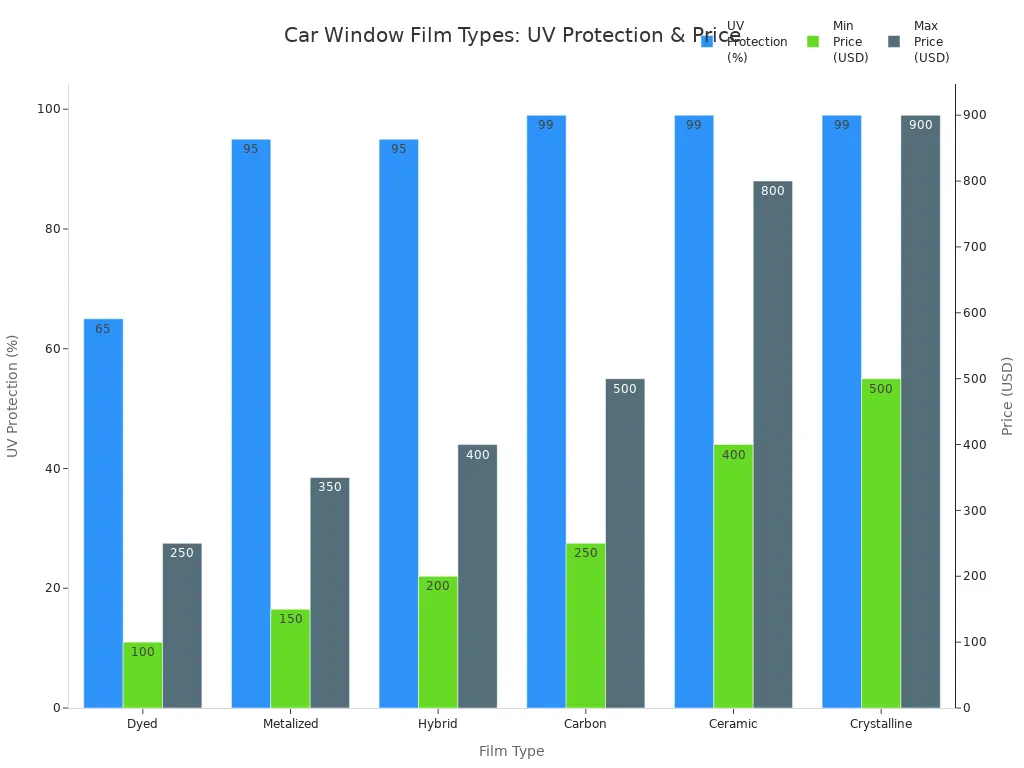
You want your car to stay cool and safe from the sun. Car Window Film can block up to 99% of harmful UV rays. Ceramic and nano-ceramic films offer the best heat rejection and UV protection. Carbon films also keep your car cooler and protect against UV rays. Dyed films cost less but block less heat and may fade faster. The chart below shows how different films compare:

Window tints help keep your belongings hidden. Darker films make it hard for others to see inside your car. Security films add strength to the glass, making it harder to break. If the window breaks, the film holds the glass together, which can protect you from injury and slow down thieves.
Tints reduce glare and shield your privacy.
Films help prevent glass from shattering in accidents or break-ins.
Car Window Film changes how your car looks. Dyed tints give a dark, non-reflective look but may fade. Metalized films look shiny and reflect light. Carbon films have a matte finish and keep their color. Ceramic films look clear and sleek, with high clarity and no fading.
Tint Type | Look | Fading | Reflective |
|---|---|---|---|
Dyed | Dark, non-shiny | Yes | No |
Metalized | Shiny, reflective | No | Yes |
Carbon | Matte, deep black | No | No |
Ceramic | Clear, high clarity | No | No |
Professional installation costs more but gives better results. You pay $150–$500 for expert work, depending on film type and car size. DIY kits cost $30–$150 but may lead to mistakes and extra costs. High-quality films last longer and save money over time.
Each state has its own tint laws. In California, front side windows must let in at least 70% of light. Rear windows can be darker. Windshield tinting is only allowed on the top 4 inches. Illegal tints can lead to fines, fix-it tickets, and even higher insurance costs.
Tip: Always check your local laws before choosing a tint.
Professional installers use special tools and skills for a smooth finish. DIY kits are cheaper but can leave bubbles or creases. High-quality Car Window Film lasts over ten years with proper care. Clean your windows with soft cloths and ammonia-free cleaners to keep the film looking new.
When you compare Car Window Film and regular window tint, you see big differences in performance, cost, and legal rules. Ceramic window films use nano-ceramic particles. These films block up to 95% of infrared rays and almost all harmful UV rays. They keep your car cooler and protect your skin and interior better than regular dyed tints. Regular tints give some heat and UV protection, but they do not last as long and can fade or peel over time. Ceramic films also keep their color and clarity, so you get a clear view and no signal problems for your phone or GPS.
The darkness of the tint matters too. A 15% tint is darker and gives more privacy, but it can make it hard to see at night and may break the law in some states. A 20% tint is a bit lighter, so you get better night vision and it usually meets more state laws. Still, the type of film you pick matters more for heat and UV protection than just how dark it is.
Cost depends on your car and the film you choose. Here is a quick look at price ranges for different vehicles:
Vehicle Type | Cost Range ($) |
|---|---|
Sedans | 200 – 400 |
Hatchbacks | 250 – 450 |
Station Wagons | 300 – 500 |
SUVs | 350 – 600 |
Off-Road Vehicles | 300 – 500 |
Pickup Trucks | 200 – 400 |
Tesla Vehicles | 500 – 800 |

Legal rules focus on how much light passes through your windows. For example, California says front side windows must let in at least 70% of light. Rear windows can be darker. If you do not follow these rules, you may have to pay fines or remove the tint.
You should know the main pros and cons before you decide.
Pros:
Reduces glare and blocks up to 99% of UV rays
Keeps your car cooler and protects the interior
Adds privacy and security by making it harder to see inside
Holds glass together if it breaks, which helps in accidents
Makes your car look stylish
Cons:
Can reduce visibility at night or in bad weather, especially with dark tints
Some films may fade, bubble, or peel over time
Cleaning can be tricky; some cleaners damage the film
Legal limits on darkness vary by state, so you must check local laws
May lower resale value if buyers do not like tinted windows
Tip: Choose a high-quality film and follow local laws to get the best results and avoid problems.
You have many reasons for wanting to change your car’s windows. Some people want to keep their car cool. Others want more privacy or a stylish look. You might care about safety, cost, or following the law. Before you choose, think about what matters most to you. Here are some important factors to consider:
Heat and UV Protection: If you drive in sunny places, you need strong heat and UV blocking. Ceramic and carbon films work best for this.
Privacy: Darker tints give you more privacy. They make it hard for others to see inside your car.
Budget: Dyed films cost less but do not last as long. Ceramic films cost more but give better protection and last longer.
Durability: Some films fade or peel over time. Carbon and ceramic films stay clear and strong for years.
Electronic Devices: Metalized films can block signals for GPS or phones. Ceramic and carbon films do not cause this problem.
Legal Rules: Every state has its own laws about how dark your windows can be. You must check these rules before you choose.
Factor | Dyed Film | Metalized Film | Carbon Film | Ceramic Film |
|---|---|---|---|---|
Heat Protection | Low | Medium | High | Very High |
UV Protection | Medium | High | High | Very High |
Privacy | Good | Good | Very Good | Very Good |
Durability | Low | Medium | High | Very High |
Signal Interference | None | Possible | None | None |
Cost | $ | $ | $$ | $$ |
Tip: Think about your main goal. Do you want to stay cool, save money, or follow the law? Your answer will help you pick the right film.
You face different situations when choosing window film or tint. Here are some common scenarios to help you decide:
Hot, Sunny Climates: You drive in places with lots of sun and heat. Ceramic or nano-ceramic films keep your car cool and block UV rays. These films do not need to be dark to work well.
Urban Driving: You want privacy and a stylish look. Darker tints or carbon films give you both. In cities, you can use darker films because streetlights help you see at night.
Rural or Night Driving: You drive in areas with little light. Lighter tints or clear UV-blocking films help you see better at night and still protect you from the sun.
Budget-Friendly Choice: You want to save money. Dyed films cost less and give basic protection. They may fade faster and do not block as much heat.
Legal Compliance: You live in a state with strict tint laws. Choose films that meet the legal visible light transmission (VLT) limits. Static cling films are easy to remove if you need to adjust your tint.
Maximum Protection: You want the best for your car and health. Premium ceramic films block the most heat and UV rays. They last a long time and do not affect your electronics.
Note: Always check your local laws before you install any window film or tint.
You can match your choice to your main goal. Here are some examples:
Maximum Heat Protection: Pick ceramic or nano-ceramic films. These block up to 99% of UV rays and most heat. Brands like 3M Crystalline and XPEL nano-ceramic use special layers to keep your car cool without making windows too dark.
Best for Privacy: Choose carbon or dyed films with a darker shade. These films make it hard for others to see inside. Remember, very dark tints may not be legal on all windows.
Budget Option: Dyed films cost the least. They give some UV and glare protection but may fade over time. Good for short-term use or if you want to spend less.
No Signal Interference: Use ceramic or carbon films. Metalized films can block GPS, radio, or phone signals.
Legal Compliance: Pick films that meet your state’s VLT rules. Pre-cut films made for your car model help you follow the law. Static cling films let you change the tint if needed.
Long-Term Value: Ceramic films cost more at first but last longer and give the best protection. They keep your car cooler, protect your skin, and stop your seats from fading.
�� Choose the film that matches your needs. You get the best results when you know what you want and follow the rules.
You can pick from many kinds of window tint. First, decide what is most important to you. Do you want to block heat, have more privacy, save money, or make your car look cool?
Each tint type has its own good points and price.
Professionals and groups like the International Window Film Association can explain the rules in your area and help you choose.
Experts say it is best to let a pro put on the tint. This way, your tint will last longer and work better.
The best tint is the one that matches your needs and helps you feel safe and comfy while driving.
Factory tint colors the glass during manufacturing. Window film is a thin layer added to your windows after you buy your car. Window film blocks more heat and UV rays than factory tint.
Yes, you can remove window film. Professionals use special tools and cleaners to peel off the film without damaging the glass. You can also replace it with a different type if your needs change.
Most ceramic and carbon films do not block signals. Metalized films might cause problems with your phone, radio, or GPS. Always ask your installer about signal-friendly options.
High-quality window film can last 10 years or more. Proper care helps it last longer. Clean your windows with soft cloths and avoid harsh chemicals.
No, tint laws change by state. Some states allow darker tints, while others have strict rules. Always check your local laws before you choose a tint.


